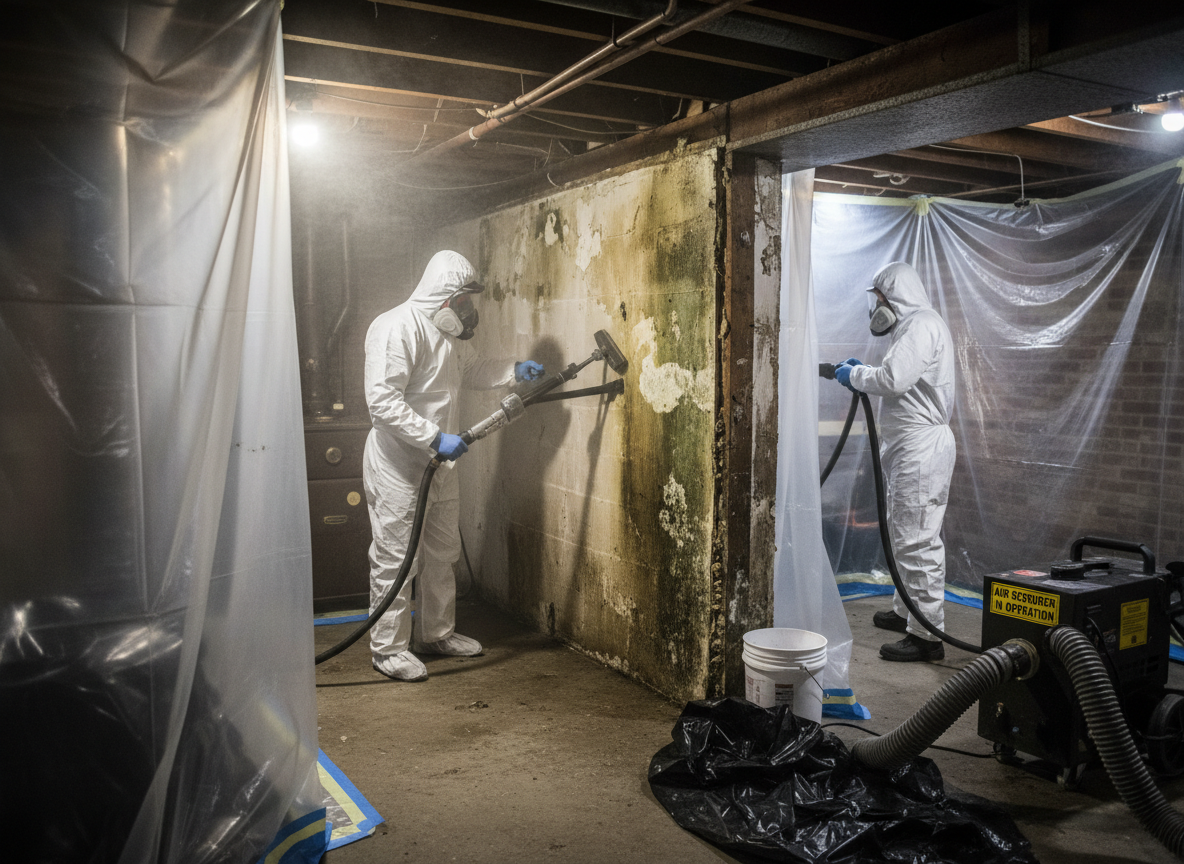
Winnetka's older ranch homes and stucco construction from the 1950s and 1960s often hide toxic mold behind walls after minor plumbing leaks or roof issues. The mild Mediterranean climate brings most rain between December and March, allowing water to sit in crawlspaces or attics before homeowners notice. Properties near Winnetka Park and along Winnetka Avenue see extra risk from irrigation overspray and poor drainage on flat lots. Removing toxic mold here requires cutting back to clean material and using negative air machines to keep spores from spreading into living spaces.
Pierce College area homes in Sherwood Forest frequently have mold in HVAC ducts after condensation builds during warm dry summers when systems run constantly. Standard drywall removal alone fails when mold has penetrated insulation or subflooring. Technicians must test for black mold varieties like Stachybotrys that thrive in the region's occasional heavy winter storms. Proper containment with plastic barriers and HEPA scrubbing prevents cross-contamination to adjacent rooms in these closely spaced neighborhoods.
Los Angeles County building codes require full removal of affected porous materials once toxic mold is confirmed, rather than simple surface cleaning. Homes near Reseda and Woodland Hills often need extra attention to soil moisture that wicks up through slab foundations. Skipping the drying phase after removal leads to rapid regrowth when summer temperatures climb. Local crews track moisture levels with meters before sealing any cavities to avoid callbacks.
Technician insight
In Winnetka the thing that catches most people out with toxic mold removal is water that travels under the slab from park irrigation or neighbor yard drainage, especially in homes built before 1970 near Winnetka Park where the flat terrain lets moisture sit for weeks after our winter rains.
Crawlspace Mold After Winter Leak
A Sherwood Forest homeowner noticed a musty smell weeks after a roof leak during heavy January rain. Inspection revealed toxic mold on joists and insulation beneath the 1960s home. The crew contained the space, removed affected wood and insulation, dried the area thoroughly, and confirmed clearance with air sampling.
How it works
- 1
Initial Assessment
Technician inspects visible signs and uses moisture meters and borescopes to locate hidden growth in walls, attics, and crawlspaces.
- 2
Containment Setup
Plastic barriers and negative air pressure isolate the work zone to stop spores from moving through the home or into neighboring units.
- 3
Removal and Cleaning
Affected drywall, insulation, and other materials are cut out and bagged; remaining surfaces receive antimicrobial treatment and HEPA vacuuming.
- 4
Drying and Verification
Industrial dehumidifiers and air movers dry the structure, followed by post-remediation testing before any reconstruction begins.
Pricing
Pricing varies by the square footage affected, depth of hidden growth, and whether HVAC cleaning or structural drying is required.