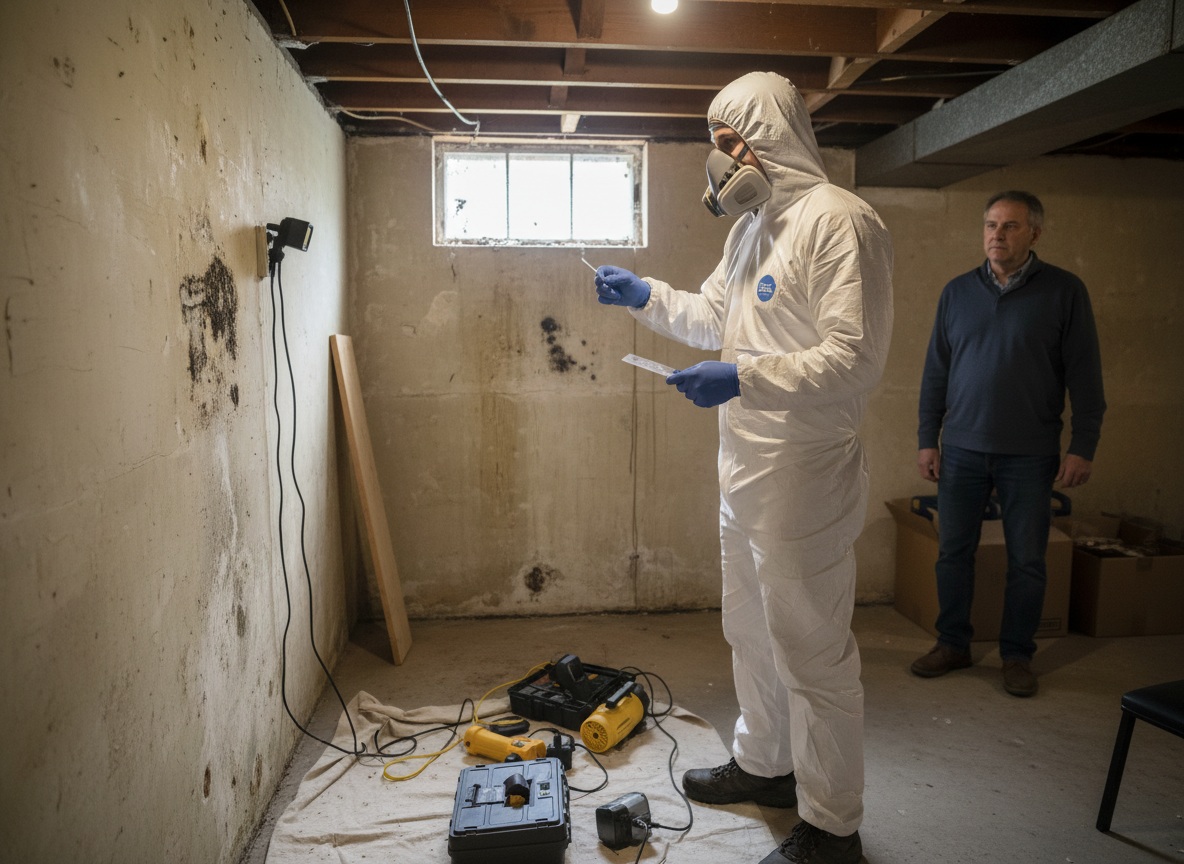
Winnetka homes built from the 1950s onward often feature stucco exteriors and raised foundations that trap moisture after winter rains in the mild Mediterranean climate. Dry summers mask leaks until they reach interior walls or attics. Inspection requires checking roof penetrations, window seals, and irrigation lines near Winnetka Park and Sherwood Forest, where flat terrain lets water collect under slabs. Technicians use moisture meters and borescopes to locate growth behind drywall without unnecessary demolition.
Properties bordering Reseda and Woodland Hills frequently show mold in laundry rooms and bathrooms due to shared plumbing lines in post-war tract homes. Pierce College area rentals add variables like deferred maintenance and tenant-installed fixtures that create hidden condensation points. Los Angeles County code requires proper ventilation in enclosed spaces, and inspectors note any deviations that could affect insurance claims or resale. Airflow patterns in these single-story homes differ from newer builds, changing where spores settle.
Crawlspace and attic access in Winnetka is limited by low clearances and insulation depth, so inspectors document every accessible section and note inaccessible zones for the report. Warm dry summers reduce surface mold visibility but allow subsurface colonies to persist in soil-adjacent foundations. The service produces a written summary with photos and moisture readings that homeowners can share with remediation crews or adjusters.
Technician insight
In Winnetka, the thing that catches most people out with Mold Inspection is how irrigation overspray from yards near Sherwood Forest and Winnetka Park keeps soil against the foundation wet year-round, even in the dry summers, so mold starts under the slab edge where standard visual checks never reach.
Attic Moisture Near Winnetka Park
Homeowner noticed a musty smell after winter rains in a 1960s stucco house bordering Winnetka Park. Inspection located roof flashing failure allowing water into insulation above the master bedroom. Thermal imaging confirmed active moisture and early mold growth. Report detailed the exact sections needing repair so remediation could target only the affected area.
How it works
- 1
Initial Consultation
Discuss visible signs, recent leaks, and property history over the phone or on site at the Winnetka address.
- 2
Visual and Instrument Inspection
Walk through all rooms, attics, and crawlspaces using moisture meters and thermal imaging to map affected zones.
- 3
Sampling and Documentation
Collect surface or air samples where needed and photograph every finding with location notes tied to local landmarks.
- 4
Report Delivery
Provide a written summary with findings, photos, and next-step recommendations within 24 hours.
Pricing
Pricing varies by square footage, number of stories, and access difficulty; upfront quotes given before work begins.