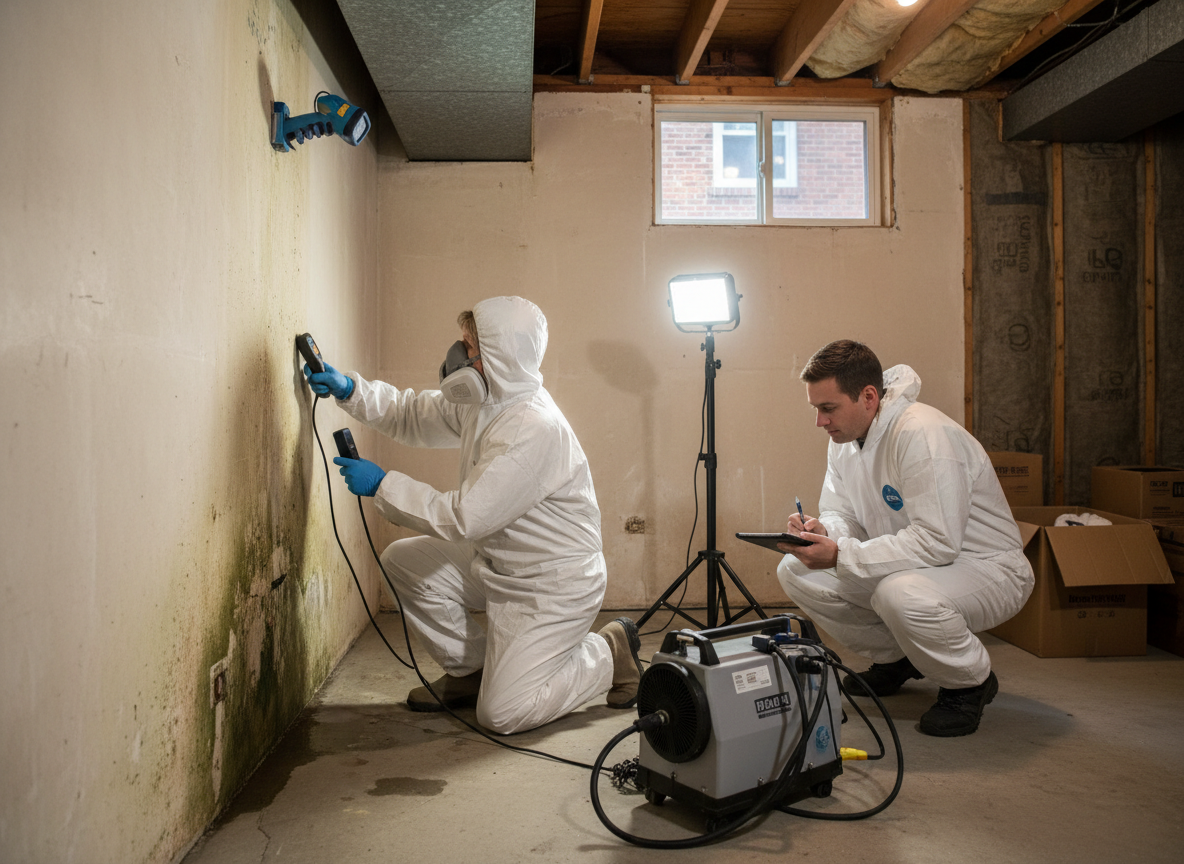
Winnetka homes built mostly in the 1950s and 1960s often feature stucco exteriors and raised foundations that trap moisture after winter rains in the mild Mediterranean climate. Dry summers mask leaks until visible spots or odors appear, especially in attics and crawlspaces common around Winnetka Park and near Pierce College. A proper inspection maps these hidden paths using moisture meters and thermal imaging before any remediation begins, preventing unnecessary wall openings in Reseda or Woodland Hills properties.
Los Angeles County building codes require documentation of moisture sources during inspections, and older Sherwood Forest tract homes frequently show issues at roof penetrations or around HVAC ducts that run through unconditioned spaces. Inspectors check for condensation points created by the warm dry summers followed by sudden rain events, which differ from coastal patterns. This local weather cycle means post-rain inspections catch problems earlier than in drier inland valleys.
Edge cases in Winnetka include mold growth behind bathroom tile in multi-story homes where plumbing stacks leak slowly into wall cavities. These spots stay hidden until an odor complaint arises or a renovation exposes them. Inspectors always test adjacent rooms because spores travel through shared attics common in the neighborhood's dense layout.
Homeowners sometimes confuse surface mildew with structural mold after the first fall rains, leading to incomplete fixes. A full inspection identifies whether the issue stems from poor grading around the foundation or from condensation in the dry summer months, guiding targeted repairs that hold up through the next wet season.
Technician insight
In Winnetka, the thing that catches most people out with Mold inspection near me is how the long dry summers let small roof leaks around older stucco homes near Winnetka Park go unnoticed until winter rains push moisture into the attic insulation.
Attic Moisture in Sherwood Forest
A resident in Sherwood Forest reported a musty smell after early winter rains. Inspection found elevated moisture in the attic insulation above a bathroom where a slow vent leak had gone undetected through the dry summer. Containment and targeted removal cleared the growth without opening finished ceilings. Follow-up testing confirmed levels returned to normal.
How it works
- 1
Initial Assessment
Review property history and visible signs in Winnetka homes, noting any recent rains or plumbing work.
- 2
Moisture Mapping
Use meters and imaging to locate hidden water in attics, crawlspaces, and walls typical of local 1950s-60s construction.
- 3
Air and Surface Sampling
Collect samples from multiple zones to identify mold types without disturbing the structure.
- 4
Report and Recommendations
Deliver findings with photos and a clear plan tailored to Los Angeles County requirements.
Pricing
Cost depends on square footage, number of samples, and access difficulty; upfront quotes provided after initial discussion.