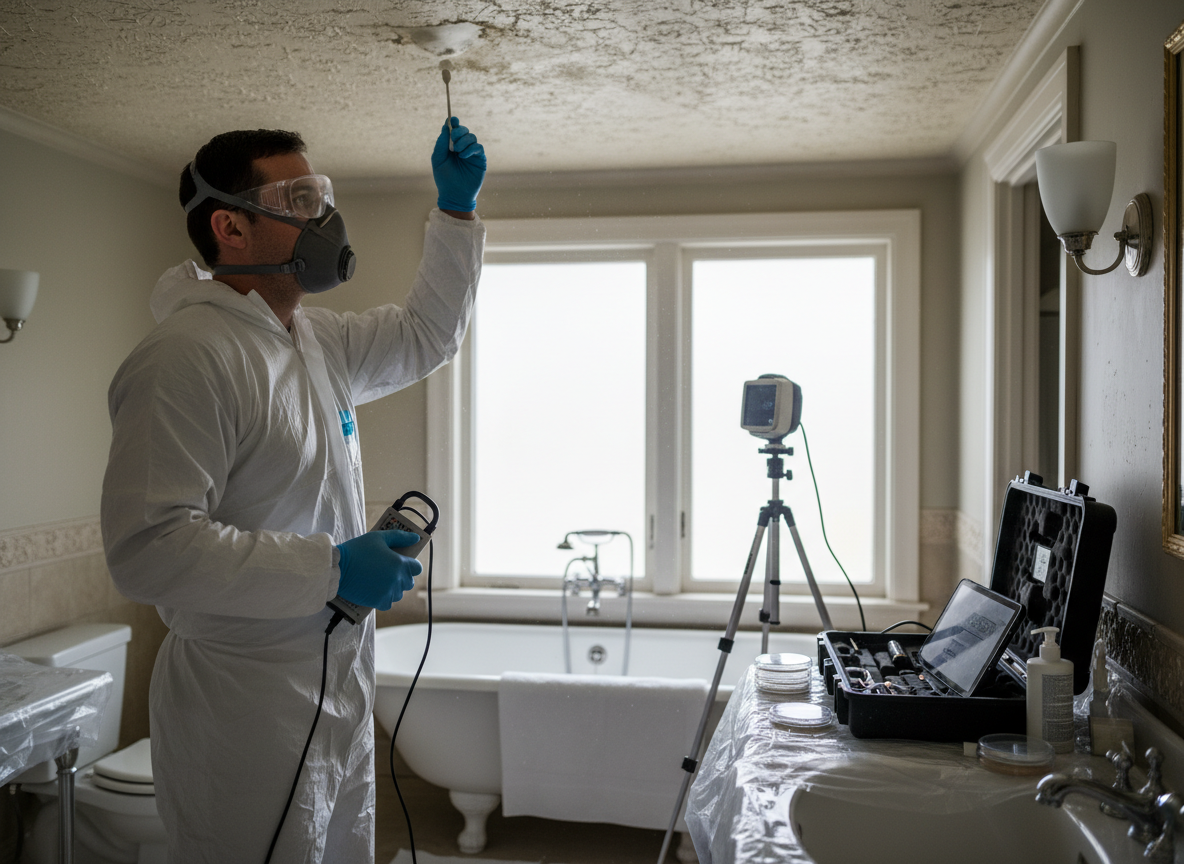
Winnetka homes built in the 1950s and 1960s often feature stucco exteriors and raised foundations that trap moisture after winter rains, even under the area's mild Mediterranean climate with warm dry summers. Mold testing begins with a visual inspection of attics, crawl spaces, and bathrooms where condensation from temperature swings can develop behind walls. Air sampling and surface swabs are collected and sent to accredited labs to identify species and concentration levels that matter for remediation decisions.
Properties near Winnetka Park and Pierce College frequently sit on older plumbing lines that leak slowly into slab foundations, creating hidden growth that only shows up through targeted testing. Residents in Sherwood Forest report musty odors after rare heavy rains because the flat terrain allows water to pool against foundations. Testing protocols account for these conditions by including outdoor control samples to distinguish normal outdoor spores from indoor amplification.
Testing also covers homes in adjacent Canoga Park, Woodland Hills, and Reseda where similar post-war construction meets the same seasonal moisture patterns. Results guide whether remediation is needed or if improved ventilation will resolve the issue. Reports include chain-of-custody documentation and clear explanations of findings without recommending unnecessary work.
Seasonal Moisture Patterns
Winnetka's dry summers reduce visible mold activity, yet indoor humidity from air conditioning use can still support growth in poorly ventilated bathrooms and laundry rooms. Winter rains, though infrequent, saturate soil around older foundations and push moisture into crawl spaces. Testing performed after the first rains often reveals issues that remain hidden during summer months.
Technician insight
In Winnetka, the thing that catches most people out with Mold Testing is assuming dry summers mean no moisture problems. Older homes near Sherwood Forest and Winnetka Park often have crawl spaces with poor ventilation where winter rain still creates hidden growth that only shows up once you test after the first storms.
Hidden Growth Behind Bathroom Wall
A homeowner in Winnetka noticed a persistent musty smell in a hall bathroom but saw no visible mold. Inspection revealed elevated moisture in the wall shared with an older plumbing stack. Air samples confirmed elevated Aspergillus levels. Targeted remediation was performed on the affected wall section only.
How it works
- 1
Initial Consultation
Discuss symptoms, property history, and visible concerns over the phone or on site at 7574 Winnetka Ave.
- 2
Visual Inspection
Examine attics, crawl spaces, bathrooms, and exterior grading around Winnetka homes for moisture sources.
- 3
Sample Collection
Take air samples, surface swabs, and bulk materials as needed, plus outdoor controls for accurate comparison.
- 4
Laboratory Analysis
Send samples to an independent lab for identification and spore count quantification.
- 5
Report Delivery
Provide a written report with findings, photos, and next-step recommendations within a few days.
Pricing
Pricing varies by number of samples, property size, and whether crawl space or attic access is required.