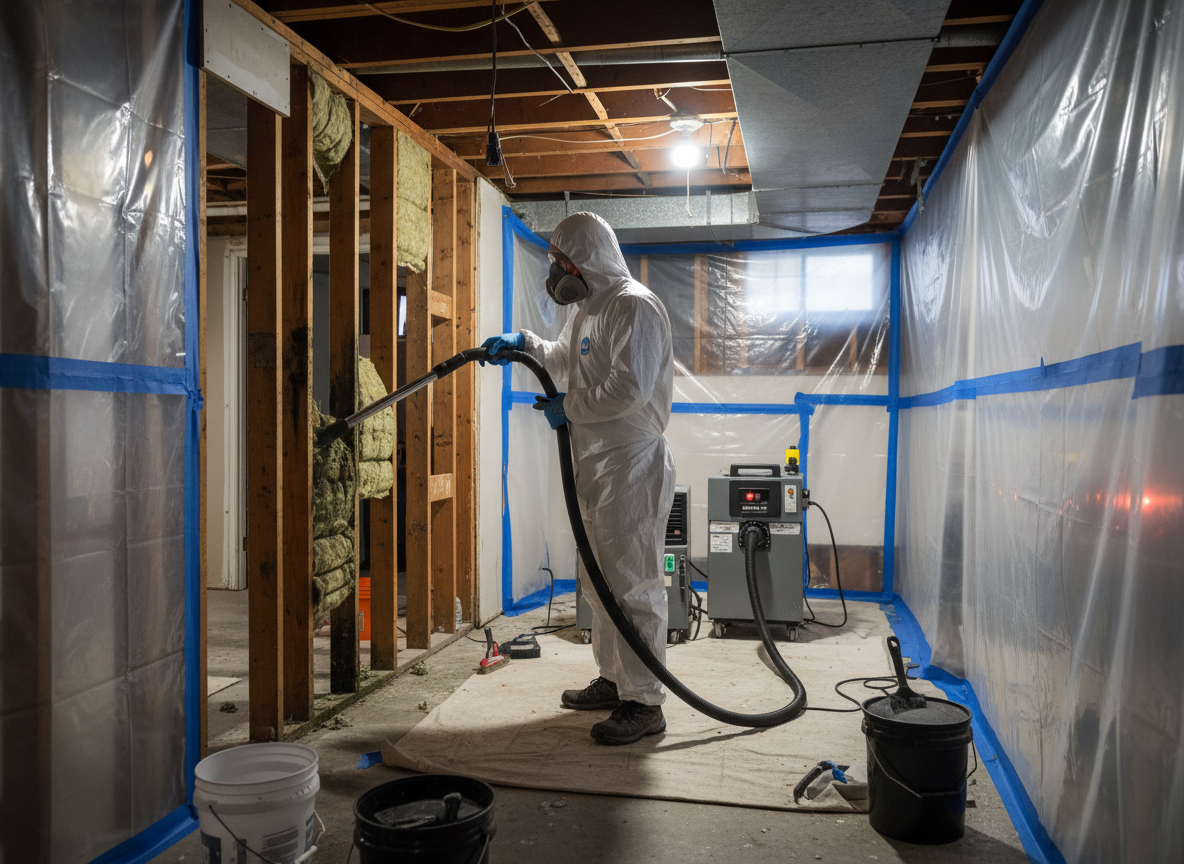
Winnetka homes built after World War II often feature stucco exteriors and drywall interiors that trap moisture from roof leaks or plumbing lines, especially in areas near Winnetka Park where mature trees shade properties and slow drying after rare rains. Professional mold removal starts with identifying these hidden pockets rather than surface cleaning alone, since the mild Mediterranean climate with warm dry summers can mask ongoing problems until humidity spikes from indoor sources like bathrooms or kitchens.
In neighborhoods such as Sherwood Forest, older single-story ranch homes sit on flat lots with minimal grading, allowing irrigation runoff or condensation from air conditioning units to seep into crawl spaces and wall cavities. Technicians use moisture meters and borescopes to map growth behind textured walls without unnecessary demolition, then apply containment barriers to prevent spores from spreading to adjacent rooms during removal.
Los Angeles County building practices in Reseda and Woodland Hills frequently include shared walls or additions that create cold spots where mold thrives. Removal work here requires negative air machines and HEPA filtration to capture particles, followed by targeted antimicrobial treatment on porous materials that cannot be fully dried within 48 hours.
Edge cases arise near Pierce College where multi-unit properties have shared HVAC systems that circulate spores across units. Professional protocols include isolating affected zones and verifying clearance with third-party air sampling before reconstruction begins.
Technician insight
In Winnetka, the thing that catches most people out with professional mold removal is moisture trapped behind the heavy textured drywall installed in 1950s and 1960s homes near Winnetka Park, where summer heat keeps the surface dry while the back side stays damp from slow plumbing leaks.
Hidden Mold in Sherwood Forest Ranch
Homeowner noticed musty smell after an AC condensate line leaked near the laundry room. Inspection revealed growth extending two feet up the wall cavity and into the adjacent closet. Crew contained the room, removed the lower drywall sections, dried the framing, and treated the studs before reinstalling new material. Odor disappeared and no recurrence appeared after the next rain cycle.
How it works
- 1
Initial Assessment
Inspect all suspect areas including attics, crawl spaces, and wall cavities using moisture detection tools calibrated for Winnetka's stucco construction.
- 2
Containment Setup
Install plastic barriers and negative air pressure to isolate the work zone and protect unaffected parts of the home.
- 3
Material Removal
Cut out and bag affected drywall, insulation, or baseboards while HEPA vacuuming surrounding surfaces.
- 4
Drying and Treatment
Apply air movers and dehumidifiers, then treat remaining surfaces with EPA-registered antimicrobials suited to local humidity patterns.
- 5
Clearance Verification
Perform final moisture checks and visual inspection before allowing reentry and reconstruction.
Pricing
Costs depend on square footage affected, depth of hidden growth in older walls, and whether crawl space or attic access is required.