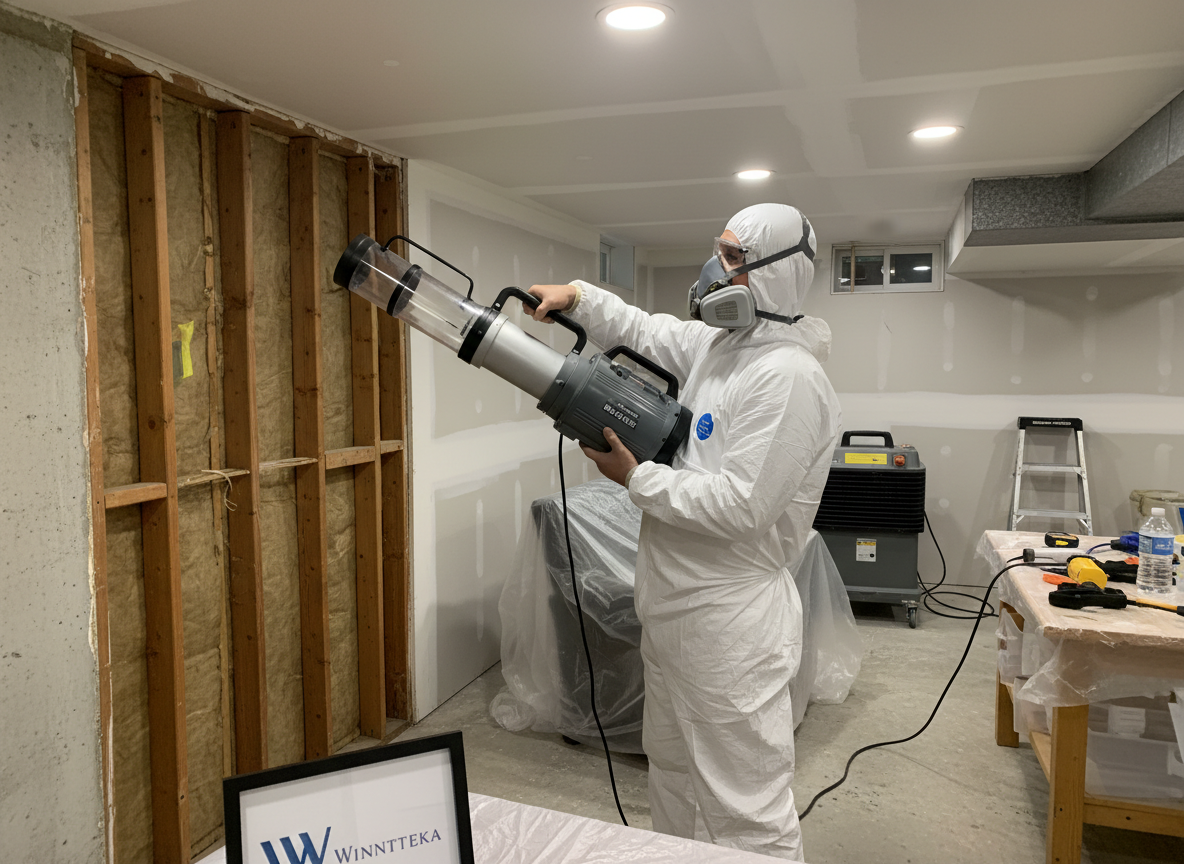
Post remediation mold testing requires careful sampling in Winnetka's older stucco homes built in the 1950s and 1960s. These structures often trap residual moisture behind walls and in attics even after visible mold is removed. In neighborhoods like Sherwood Forest, technicians collect air samples from multiple rooms plus surface swabs from previously affected areas. The mild Mediterranean climate with warm dry summers can mask lingering dampness that only shows up under lab analysis. Results must meet Los Angeles County health guidelines before any space is cleared for reoccupancy.
Testing protocols account for local conditions near Winnetka Park and Pierce College where homes sit close to tree lines and irrigation runoff. After remediation crews finish, independent samples are taken at least 24 hours later to avoid false negatives from disturbed spores. Technicians compare indoor spore counts against outdoor baselines drawn from Canoga Park and Reseda. Any elevation in species like Stachybotrys or Aspergillus triggers additional investigation before clearance is issued. This step protects against hidden colonies that reappear during the next wet season.
Homeowners in Woodland Hills and Reseda often request clearance testing on rental properties to satisfy insurance or landlord requirements. The process includes chain-of-custody documentation for every sample sent to an accredited lab. Reports detail spore types, concentrations, and whether levels fall within normal background ranges for the region. Without this verification, previous moisture issues from roof leaks or plumbing can restart growth within weeks once humidity rises again.
Technician insight
In Winnetka, the thing that catches most people out with post remediation mold testing is residual moisture trapped in the original plaster and lath walls of 1950s homes around Sherwood Forest. Even after dry summers, those cavities hold enough humidity to let spores survive until the next rain event. Sampling only the open rooms misses the real problem.
Hidden Spores Behind Kitchen Wall
A homeowner in Winnetka called after remediation crews finished a bathroom leak repair. Air samples from the main rooms came back clear, but surface swabs from behind the kitchen drywall showed elevated Aspergillus levels. Additional samples confirmed the source was an old pipe chase that had not been fully opened during the first job. The wall section was reopened, dried, and retested before clearance was granted.
How it works
- 1
Site Assessment
Walk through the treated areas in the Winnetka property to identify all previously affected zones and note any remaining moisture sources.
- 2
Sample Collection
Gather air and surface samples from multiple locations including attics and wall cavities, plus an outdoor control sample for comparison.
- 3
Laboratory Analysis
Send samples to a certified lab for spore identification and concentration measurement against regional background levels.
- 4
Report and Clearance
Deliver detailed findings and issue clearance documentation only when results show no active mold growth remains.
Pricing
Pricing depends on the number of samples required and the size of the property tested.