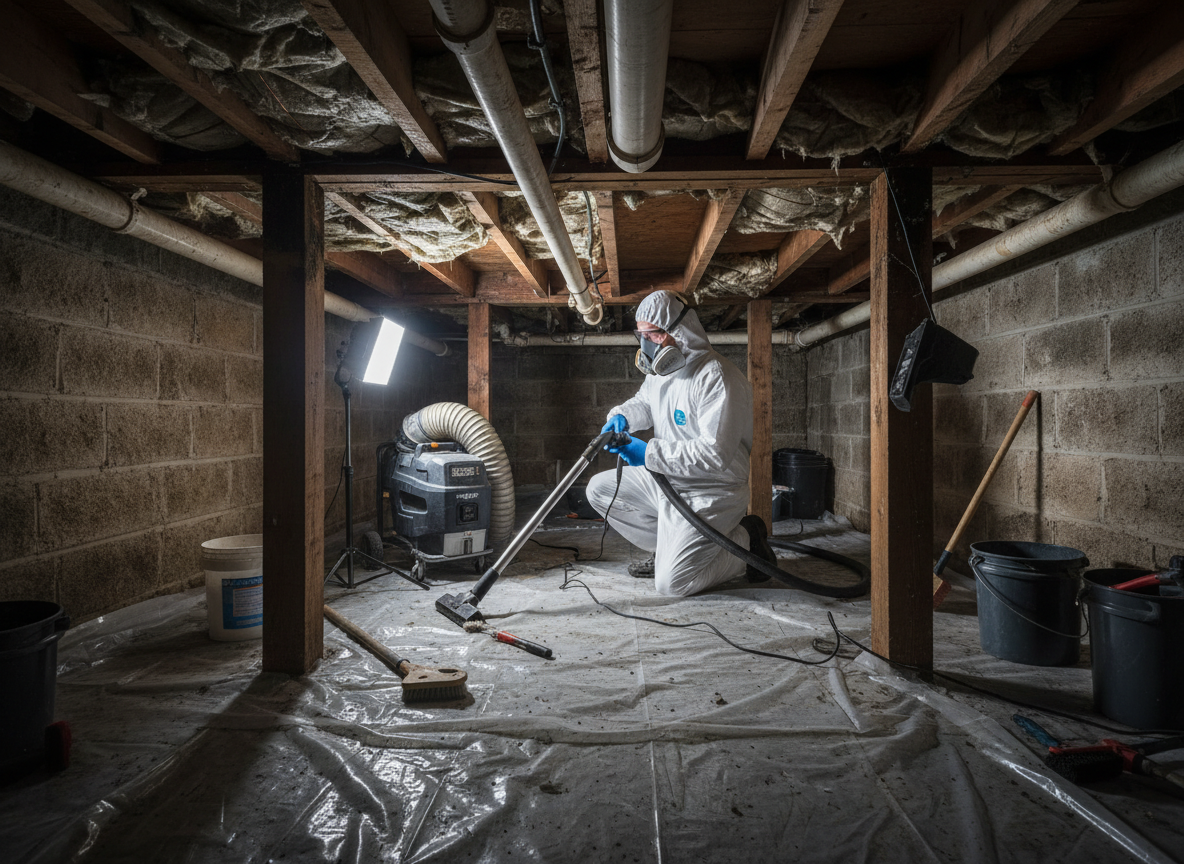
Winnetka homes built in the 1950s and 1960s often sit on raised foundations with dirt crawl spaces that trap humidity after winter rains. The mild Mediterranean climate brings most moisture between December and March, allowing mold to colonize insulation, joists, and ductwork before homeowners notice musty odors upstairs. Crews at 7574 Winnetka Ave respond at any hour because standing water in these low-lying lots can spread spores to living areas within days. Removing contaminated material requires negative-air machines and sealed entry points to keep particles out of Winnetka Park neighborhoods and nearby Sherwood Forest streets.
Access is frequently tight under homes near Pierce College, where original 18-inch clearances and low beams limit equipment movement. Technicians cut inspection ports only when necessary, then use HEPA vacuums and antimicrobial rinses on exposed soil and wood rather than relying on fogging alone. Los Angeles County codes require proper disposal of removed insulation and vapor-barrier replacement to prevent recurrence during the next wet season. Dry summers help the space stay stable once the source is corrected, but any unaddressed irrigation leaks from adjacent Canoga Park properties can restart growth quickly.
Homeowners in Reseda and Woodland Hills often mistake surface discoloration for the full problem when the real colony sits behind HVAC ducts or on the underside of subflooring. Full containment and post-remediation air sampling confirm clearance before the space is sealed. This step-by-step approach keeps work contained to the crawl space and avoids disrupting daily life above ground in dense Winnetka blocks.
Seasonal Moisture Patterns
Winter rains followed by warm dry summers create a cycle where crawl spaces stay damp just long enough for mold to establish on untreated wood. Checking irrigation lines near the foundation each fall prevents the most common re-infestation trigger in this part of Los Angeles County.
Technician insight
In Winnetka, the thing that catches most people out with crawl space mold removal is irrigation overspray from neighboring lots in Sherwood Forest that keeps the soil damp year-round even after the rainy season ends. The dry summers fool homeowners into thinking the space has dried out when the real moisture sits under the vapor barrier.
Hidden growth under 1962 Winnetka home
A homeowner near Winnetka Park noticed a musty smell after February rains. Inspection revealed mold on joists and insulation where a cracked sprinkler line from the adjacent property kept soil wet. We removed the affected materials, treated the soil, installed a new vapor barrier, and confirmed clearance with air sampling before sealing the space.
How it works
- 1
Initial Assessment
Technician enters the crawl space from the 7574 Winnetka Ave base to map moisture sources and visible growth without disturbing settled dust.
- 2
Containment Setup
Plastic sheeting and negative air machines isolate the work area so spores do not reach living spaces in Winnetka or Sherwood Forest.
- 3
Removal and Cleaning
Contaminated insulation and affected wood are removed, then joists and soil receive HEPA vacuuming and antimicrobial treatment.
- 4
Drying and Verification
Dehumidifiers run until moisture levels stabilize, followed by clearance testing before the vapor barrier is reinstalled.
Pricing
Cost depends on crawl space size, depth of mold into insulation and wood, and whether HVAC ducts require separate cleaning.